The three shapes of billing for card machines and POS
Card machines and POS should be compared on the shape of their billing model, not simply on one headline rate. Businesses come in all shapes and sizes, so each needs to choose the right billing model to avoid expensive mismatches.
What are the billing models used for card machines and POS?
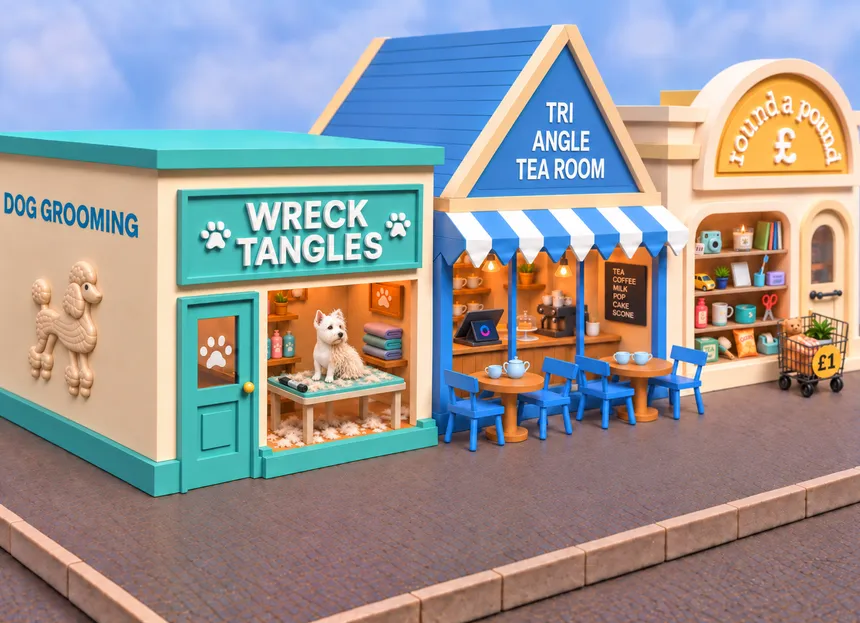
There are three types of billing model for card machines and POS - Component, Blended, and Hybrid. Each billing model can be pictured as a shape, matching to a common trading pattern.
The Component model is rectangular because it has 4 individually billed parts. The Blended model rounds these parts into one simple rate. The Hybrid model includes parts of the Component and Blended models, plus a third part to make it triangular in shape.
Who does the rectangular shaped Component billing model suit?
The rectangular shaped Component billing model suits merchants with large transaction values, or existing third-party integration.
The rectangular shaped billing model can work well for merchants with large transaction values, as Component billing has the greatest potential for low rates. However, greater billing complexity, ‘per-transaction’ authorisation fees, and additional monthly charges can offset the lower rates possible with Component billing. The Component billing model can also suit businesses already committed to third-party integration with an existing POS or booking system.
Who does the round shaped Blended billing model suit?
The round shaped Blended billing model suits merchants who want one simple rate for every card type, billed daily on a Pay-As-You-Go basis, so there’s no monthly bill.
The Blended billing model rounds all charges into one simple rate, deducted daily on a Pay-As-You-Go basis, so merchants don’t have a monthly bill to budget for. The round shaped Blended billing model especially suits merchants with average transaction values, and its ‘no-use, no-fee’ contract is ideal for seasonal or lower turnover traders.
Who does the triangular shaped Hybrid billing model suit?
The triangular shaped Hybrid billing model suits merchants wanting a POS and integrated card machine supplied as a package, and the simplicity of a single Blended rate.
The Hybrid billing model combines monthly hardware rental components with one simple processing rate, supplying an integrated POS & card machine package without the complexity of Component billing. The triangular shaped Hybrid billing model suits merchants wanting integrated POS functionality with processing costs deducted daily, and a single, predictable monthly bill.
How billing shapes match to trading patterns
rectangular
Billing model
Component
Processing fees
deducted monthly
Monthly charges
machine rental, PCI, MMSC
POS
integrates with third-party POS & booking systems
Card rates
variable rates - dependent on card type
Pros & Cons
lowest rates, but ‘per-transaction’ fees added. 12-month contract commitment
Best for
trading patterns with large transaction values, or needing integration with third-party POS or booking systems
triangular
Billing model
Hybrid
Processing fees
deducted daily
Monthly charges
POS / hardware rental
POS
integrated POS & card machine package, with no upfront cost
trading patterns wanting an integrated POS with simple fees and a single monthly rental charge
round
Billing model
Blended
Processing fees
deducted daily
Monthly charges
none (Pay-As-You-Go)
POS
standalone card machine with free, basic POS
Card rates
same rate for all card types
Pros & Cons
low ‘no-use, no-fee’ commitment, but an ‘all-in’ rate may impact large transactions
Best for
trading patterns with average transaction values, wanting Pay-As-You-Go simplicity with no monthly bill or charges
Why not just one billing model and one low rate for every merchant?
No single billing model and rate can suit all merchant trading patterns - because businesses come in all shapes and sizes.
Merchants don’t pay their card machine costs in rates - they’re paid in pounds and pence. The rate is only one part of a bill, and comparing the lowest rate of a Component billing model against an ‘all-in’ Blended rate will be misleading. Likewise, rental-free card machines could actually cost some merchants more - highlighting why their trading pattern should be fully understood before a billing model is chosen.
Do you offer next-day payouts for my card machine takings?
The card machines uno recommends all feature next-working-day payouts to ease the cash-flow struggles of many independent UK businesses. For merchants that need payouts over weekends too, uno can also offer a 7-day payout option at extra cost, with the Component billing model.
Any card machine uno recommends also has automatic end-of-day settlement, so the day’s card takings are batched overnight without any manual action needed by the merchant. End-of-day ‘Z reports’ can easily be generated for businesses that require them, but they are purely optional - automatic batching occurs with or without them.
Am I locked into a contract?
Whether a merchant is locked into a contract depends on the billing model. The Component and Hybrid billing models do carry a 12-month contract commitment. uno always clarifies the contract terms before a merchant commits to anything.
How do countertop and portable card machines compare?
With modern card machines the merchant is no longer forced to choose between countertop or portable designs - all-day battery life means any terminal can either be sat on a counter, or used handheld. Every card machine uno recommends connects via Wi-Fi and built-in 4G multi-network SIM, so nothing anchors it to a till or counter. The choice that does still matter is between a card machine and a card reader - which tethers to a phone and has no connection of its own.
Why go through uno rather than direct to a provider?
Individual payment providers only offer their own preferred billing model, whereas uno values offering all three, so each merchant’s trading pattern can be matched to the right billing model.
Ready to choose the right payment solution for your business?